Coping with Your Partner's Poor Sleep Habits That Affect Your Own Sleep

Jan 3, 2025 By Victoria Gonzalez

Sharing a life with a partner brings with it a tapestry of experiences, both delightful and challenging. Among the latter category, sleep disturbances caused by your partner's habits can be a particularly vexing issue. Sleep is a sacred commodity, essential for our well-being and daily performance, and when it's disrupted, it can cast a long shadow over our lives.


Kathryn Tipton, LPC, a specialist in cognitive behavioral therapy for insomnia, illuminates the issue, noting that our sleep is deeply influenced by those with whom we share our space. "It's easy for someone else's bad sleep habits to impact our own because we're social creatures," she says. The key to resolving these disruptions lies in a combination of understanding, communication, and strategic adjustments to our routines and environments.


One common sleep disruptor is the misaligned sleep schedule. Whether due to work demands or personal habits,Inconsistent sleep patterns can disrupt your night's sleep. Tipton suggests that while you can request your partner to maintain a regular sleep schedule, ultimately, we cannot control others. The solution, then, is to focus on your own sleep hygiene, keeping a regular sleep schedule, particularly a consistent wake-up time, to maintain your circadian rhythm. To minimize disturbances, consider using a vibrating alarm clock, earplugs, and white noise machines to create a buffer against the noise that can jolt you from sleep.


The habit of falling asleep to the TV is another pitfall. The noise and blue light emitted by screens can delay bedtime and disrupt sleep. Dr. Anil Rama, a sleep medicine specialist, recommends reducing the brightness of the TV or using a blue light filter. Utilizing sleep timers on TVs and tablets can also help ensure that the screens turn off after a set period, promoting a more sleep-conducive environment.


When children join the sleep mix, it can further complicate matters. Tipton advises that being in a child-free bed is ideal. If your child occasionally ends up in your bed, gently returning them to their own once they're asleep can be a solution. For more frequent occurrences, consider alternative sleeping arrangements within your room or child's room to maintain both comfort and personal space.


Tossing and turning due to inability to sleep can be another source of disturbance. Tipton notes that going to bed when not sleepy can increase frustration and anxiety, making sleep more elusive. Investing in a memory foam mattress can help absorb your partner's movements, while separate mattresses with a gap between them can significantly reduce the sensation of movement.


Light exposure before bed can also disrupt sleep. Tipton suggests discussing dimming options or using a night light with your partner. Wearing blue light-blocking glasses in the evening and switching to an eye mask at bedtime can further support a natural sleep transition.


Living with a partner who is loud during your sleep time can be a challenge. White noise and earplugs can be your allies in muting the sounds that disrupt your rest. Collaborating on minimizing noise while one partner is sleeping, such as setting ringers to vibrate or avoiding vacuuming, can also contribute to a quieter shared environment.


Lastly, the habit of drinking alcohol before bed can lead to louder snoring and increased restlessness. Tipton recommends protective measures such as earplugs, white noise machines, and using a body pillow as a barrier between you and your partner to shield your sleep.


In conclusion, the path to better sleep when faced with your partner's bad sleep habits is not a one-size-fits-all journey. It requires a tailored approach that considers individual needs and preferences. By fostering open communication about your sleep requirements and working together to implement solutions, you can enhance the quality of your sleep and, by extension, your shared life. Remember, the goal is not to force a single sleep mold but to find harmony in your differences, ensuring that both you and your partner can enjoy the restorative benefits of a good night's sleep.


Recommend Posts
Health

The Advantages, Considerations & How to Experiment with It

By Megan Clark/Jan 3, 2025

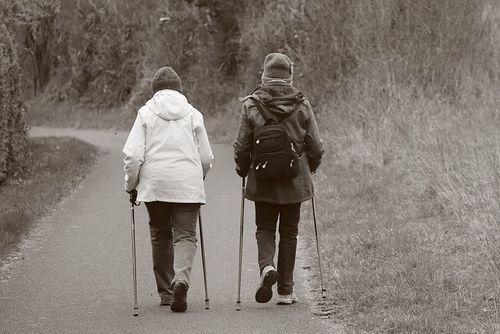
Nordic walking, a fitness phenomenon with roots in Finland, has emerged as an innovative approach to elevate the traditional act of walking into a full-body workout. This method, initially designed as a summer training regimen for cross-country skiers, has transcended its athletic origins to become a popular choice for health enthusiasts seeking a more engaging and beneficial form of exercise. As with any new fitness trend, it is essential to understand the intricacies of Nordic walking, its health benefits, potential risks, and how it can be integrated into a holistic wellness routine.
Health

Why Am I So Gassy at Night? A Dietitian Explains

By Victoria Gonzalez/Jan 3, 2025

Gas, a natural byproduct of the digestive process, is an inevitable part of human physiology. While it is a normal occurrence, excessive gas can be a source of discomfort and may indicate underlying digestive issues. Particularly at night, when the body should be resting and recovering, the presence of gas can disrupt sleep and affect overall well-being. Understanding the causes of nocturnal gas and implementing strategies to mitigate it can lead to a more comfortable and restful night's sleep.
Health

10 Habits for a Healthy Evening Routine

By Jessica Lee/Jan 3, 2025

Sleep, that elusive elixir of health and vitality, remains an enigmatic yet essential component of our well-being. While the precise reasons for our nightly slumber continue to puzzle scientists, the benefits are clear: improved skin health, a healthier heart, enhanced focus, sharper memory, and even aid in weight loss. Despite these advantages, many struggle to achieve the restorative rest they need, with stress, endless tasks, and the allure of digital devices conspiring against us. Research indicates that elevated levels of cortisol, our stress hormone, can degrade sleep quality, a problem that can escalate over time. Therefore, developing an evening routine that promotes relaxation and prepares the mind and body for sleep is crucial.
Health

4 Ways to Boost the Effectiveness of Your Flu Shot

By George Bailey/Jan 3, 2025

As the leaves turn and the air grows crisp, the fall season ushers in a familiar ritual for many: the annual flu shot. In a year marked by the unprecedented challenges of the COVID-19 pandemic, the importance of receiving a flu vaccination has never been more pronounced. The flu shot serves as a critical tool in maintaining personal health and reducing the strain on healthcare systems during the cold and flu season. By examining the CDC's recommendations and consulting with experts like Amira Roess, Ph.D., M.P.H., an infectious disease specialist at George Mason University, we can explore the benefits of the flu shot and how to maximize its effectiveness.
Health

What Your Dreams Might Be Revealing About Your Health

By Emma Thompson/Jan 3, 2025

The realm of dreams is a mysterious and often unsettling landscape, where our deepest fears and anxieties can come to life. Those jarring dreams that leave us waking in a cold sweat, heart racing, and with a sense of relief that it was "just a dream," may be more than random night-time disturbances. As a study in Scientific Reports concluded in 2018, these dreams can serve as potent indicators of our overall mental health, with participants who experienced more anxiety being more likely to have negative dreams.
Health

Coping with Your Partner's Poor Sleep Habits That Affect Your Own Sleep

By Victoria Gonzalez/Jan 3, 2025

Sharing a life with a partner brings with it a tapestry of experiences, both delightful and challenging. Among the latter category, sleep disturbances caused by your partner's habits can be a particularly vexing issue. Sleep is a sacred commodity, essential for our well-being and daily performance, and when it's disrupted, it can cast a long shadow over our lives.
Health

Here's How to Remove the 8 Most Common Food Stains, According to Cleaning Experts

By David Anderson/Jan 3, 2025

Stains are the unsung villains of the laundry world, striking at the most inconvenient of times and leaving their mark on our favorite clothing, upholstery, and rugs. They seem to appear from nowhere, ruining the fabric of our daily lives with their stubborn persistence. Yet, the battle against stains is not one of hopelessness; it is a challenge that can be met with the right knowledge, tools, and techniques.
Health

The Number One Habit to Break for Better Bowel Movements

By Michael Brown/Jan 3, 2025

The human body is a marvel of biological systems, each intricately designed to perform its specific function with precision. Among these systems is the digestive process, a complex journey that food undertakes from the moment it enters our mouths until the remnants are expelled. However, for many, this process is not always smooth, and the discomfort of constipation can cast a shadow over an otherwise healthy routine. Understanding the habits that contribute to this discomfort and learning how to cultivate a healthy relationship with our bowel movements is crucial for overall well-being.
Health

Covid-19 Cases are Rising Again in the US After a Long Period of Low Levels

By Megan Clark/Jan 3, 2025

As the winter season unfolds, the United States is witnessing a resurgence of Covid-19 infections, a trend that deviates from the typical patterns observed in previous years. While Covid-19 levels have historically risen in early November and peaked by December, this year saw a peculiar delay, with cases remaining low through October and November. However, a significant shift occurred in early December, with a swift escalation from low to high levels by the middle of the month. According to data from the US Centers for Disease Control and Prevention (CDC), there was nearly a threefold increase in Covid-19 circulation between the week ending December 7 and the week ending December 21. This surge has been widespread across the nation, with a particularly sharp increase in the Midwest, where Covid-19 levels are almost twice as high as in other regions.
Health

Dry January Tips: How to Take a Break from Alcohol

By Daniel Scott/Jan 3, 2025

January often marks a time for renewal and reflection, with many individuals pledging to embark on a "Dry January" in an effort to abstain from alcohol for the entire month. This challenge, while seemingly simple, can provide a wealth of benefits, from improved health to a clearer understanding of one's relationship with alcohol. Dr. Sarah Wakeman, senior medical director for substance use disorder, and Dr. Sanam Hafeez, a neuropsychologist, offer insights into the importance of Dry January and how to navigate it successfully.
Health

Deepfakes: What parents need to know

By Sophia Lewis/Jan 3, 2025

In the digital age, the proliferation of technology has brought with it a host of new challenges, none more insidious than the rise of deepfakes. These AI-generated images, videos, and audio recordings, which appear real but have been digitally manipulated, present a particularly pernicious threat to our society, particularly within the vulnerable environment of our schools. A recent survey by the Center for Democracy & Technology revealed a startling statistic: 40% of students and 29% of teachers were aware of a deepfake associated with their school that was shared in the last school year. This phenomenon is not a distant threat but a present reality that demands our immediate attention and action.
Health

As Human H5N1 Cases Intensify, NIH Urges Increased Action on Avian Influenza

By Jessica Lee/Jan 3, 2025

In the realm of public health, the emergence of infectious diseases is a constant challenge, requiring vigilance and swift action to mitigate their spread and impact. The H5N1 avian influenza, commonly known as bird flu, has been a subject of concern for health experts worldwide. While most human cases in North America have been mild, a recent severe case involving a Canadian teenager has raised alarm bells, particularly because the source of her exposure remains unknown.
Health

Norovirus Cases on the Rise: A Doctor Explains the Signs to Watch For

By David Anderson/Jan 3, 2025

As the winter months set in across the United States, a surge in norovirus outbreaks has been reported by the Centers for Disease Control and Prevention (CDC). This highly contagious virus, responsible for 19 million to 21 million illnesses annually, has seen a significant rise in cases, with 91 outbreaks reported in the week of December 5, a stark increase from the 69 reported the previous week. This common stomach bug, often referred to as the winter vomiting bug, is a leading cause of foodborne illness, prompting questions about its transmission, symptoms, and prevention.
Health

A Single Cigarette Reduces Life Expectancy by 20 Minutes, UK Study Indicates

By Emma Thompson/Jan 3, 2025

As the clock ticks towards the New Year, many of us contemplate the annual tradition of setting resolutions, seeking to cast off the old and embrace the new. Among the most common of these aspirations is the resolve to quit smoking, a goal that carries with it not just the promise of improved health, but the potential to extend one's life in a meaningful way.
Health

More Popsicles, please: Can Your Tonsils Regrow?

By James Moore/Jan 3, 2025

In the summer of 1983, amidst the suburban landscapes of Detroit, a young Katy Golden prepared for a rite of passage that many children undergo: the removal of her tonsils. At the tender age of five, with the promise of Popsicles and bubble gum to soothe the术后 discomfort, she embarked on a journey that she, like many others, would quickly recover from and return to her vivacious self. Fast forward to the present, and an astonishing revelation awaited Golden—four decades later, she found herself facing the prospect of tonsil removal once again.
Health

The Best Action to Take After Consuming a Large Meal

By Daniel Scott/Dec 27, 2024

As the festive season approaches, many individuals will indulge in sumptuous feasts featuring classic dishes such as succulent roasted turkey and velvety mashed potatoes. While these culinary celebrations are a delightful way to connect with loved ones, they can sometimes lead to feelings of fullness, lethargy, and general discomfort. Fortunately, there is a crucial step you can take to alleviate these symptoms the following day: maintaining proper hydration. Adequate water intake facilitates digestion, wards off constipation, and helps maintain stable blood sugar levels. Continue reading to understand the importance of hydration after a hearty meal and to receive expert advice on alleviating overindulgence the next day.
Health

Is Overhydration Possible?"

By Amanda Phillips/Dec 27, 2024

Staying adequately hydrated is a health mantra we often hear, but striking the right balance with water consumption can be a delicate act, even when you have a favorite water bottle. The question arises: Is it possible to drink too much water, and if so, what are the signs that you've overdone it? Overhydration can lead to a spectrum of symptoms, from minor inconveniences to severe health risks. Fortunately, the risk of extreme overhydration is low for most individuals, as mild overhydration typically only results in more frequent visits to the restroom. The real danger lies in consuming excessive amounts of water, especially when there's a loss of essential electrolytes.
Health

The Top Habit to Quit for Improved Bowel Movements

By Joshua Howard/Dec 27, 2024

There are moments when you exit the restroom with a grin, feeling refreshed and relieved after a smooth and effortless bowel movement. Conversely, there are days when you find yourself struggling, with numb legs, a seemingly permanent attachment to the seat, and no relief in sight. While the occasional bout of constipation is a common occurrence, if you're consistently battling to move your bowels, it might be time to scrutinize your daily routines. Unbeknownst to you, some of these habits could be undermining both your bowel health and overall well-being. One particularly detrimental habit is neglecting to respond to the body's call for a bowel movement. So, when the urge strikes, heed it and go! It may seem straightforward, yet many individuals frequently suppress their need to defecate. Whether it's due to work commitments, aversion to public restrooms, or being on the go, holding back can lead to gastrointestinal distress. "Ignoring the urge to defecate can result in harder stools that are more challenging to pass later on," advises Andrew Moore, M.D., the medical director of Gastroenterology at Swedish Hospital, part of Endeavor Health System. The urge to defecate is triggered when the rectum fills up, activating receptors in the anus to signal the brain to initiate the process. The longer the stool remains in the rectum, the more water it absorbs, making it increasingly difficult to pass. Gastroenterologist Rabia A. De Latour, M.D., an assistant professor at the Department of Medicine at NYU Grossman School of Medicine, explains that there's a narrow window for responding to the body's signal to defecate. Prolonged delay can cause the body to adapt and overlook the sensation. She warns that habitually disregarding this urge may result in chronic constipation. In essence, pay attention to your body's signals. When it's time to use the restroom, make it a priority!
Health

Why Some People Are Turning to Weight-Loss Medications to Silence the Food Noise

By Noah Bell/Dec 27, 2024

Savannah Mendoza, once a frequent spender on food delivery services and fast-food outlets to quell her relentless food cravings, found a new perspective after starting a widely-used medication for weight management and diabetes. She began to perceive her cravings as "food noise," an incessant internal dialogue about food that impedes healthy dietary choices. This concept of "food noise" has gained traction, particularly in the digital sphere, as an increasing number of individuals on popular weight-loss and diabetes medications have noticed a reduction in these internal food-related thoughts. Semaglutide and tirzepatide, both classified as glucagon-like peptide-1 receptor agonists (GLP-1s), function by signaling the body that it has recently eaten, prompting insulin release and decelerating gastric food transit. These drugs, marketed under the names Ozempic and Mounjaro for type 2 diabetes, and their counterparts Wegovy and Zepbound for weight reduction, have assisted millions in shedding pounds. Mendoza, now 27, recounts her early twenties as a period of constant preoccupation with food, often fabricating errands as a pretext for drive-thru visits and stealthily indulging in ice cream while preparing her daughter's lunch. "I just thought I was obsessed with food," she reflects from her home in Huntington Beach, California. With tirzepatide, she experiences a newfound tranquility, liberated from the food noise, attributing part of this to a side effect that leaves her feeling "perpetually bloated and uninterested in eating."
Health

Should You Use Coconut Oil on Your Skin? Weighing the Pros and Cons

By James Moore/Dec 26, 2024

Coconut oil is a versatile ingredient that excels not only in culinary applications but also in skincare regimens. However, while some sources praise it as a rejuvenating elixir, others dismiss its benefits for the skin. To determine the true value of incorporating coconut oil into your skincare routine, it's essential to consider the type of coconut oil used. "Coconut oil is derived from the flesh of mature coconuts, which grow on specific palm trees known as Cocos nucifera," explains Suzanne Friedler, M.D., a board-certified dermatologist at Advanced Dermatology PC in New York. "Various mechanical and chemical methods are employed to produce coconut oil, but for skincare, unrefined (virgin or extra-virgin) cold-pressed coconut oil is preferred." This preference stems from the belief that cold pressing, which extracts the oil without heat, preserves more of the oil's nutrients compared to other extraction techniques.